Many have asked to read the paper I wrote about a month ago for my New Testament class, which was one of my first classes for my M.A. with Liberty University’s seminary program. Anyway, a lot of hard work and research went into the paper, but it’s such a thick subject that could be approached from many different angles, and I simply chose one. It’s rather lengthy, but enjoy! (PS: footnotes included at the end).
Introduction
The kingdom of God has long been researched and uncovered for years to discover the gold of its truth and the buried treasure of its meaning. When Jesus first began his ministry and announced that the kingdom of God was at hand, he introduced no new concept; he used a phrase that was well known to the Jewish people for years. Yet, this phrase was not defined by religious teachers at the time, so one of the biggest tasks is to uncover what the implications of that phrase meant in the Old Testament, and also in the New Testament during the time of Christ.[1] The kingdom of God was the central message of Jesus Christ’s ministry on earth, and this former mystery was now revealed through the sacrifice of Christ on the cross.
The definition and nature of the kingdom of God is filled with mystery, and in a sense cannot be fully understood in human terms. Jesus himself referred to the kingdom of God as a “secret” and as “buried treasure” (Mark 4:11, Matthew 13:44). And the nature of the kingdom of God was always described in terms of present and future, but what is more of a mystery is that God’s ultimate action requires human participation and response, yet this can only come to be by faith.[2] Romans 11:33 says, “Oh, the depth of the riches of the wisdom and knowledge of God! […] his paths beyond tracing out!”, yet Romans 16:25-26 says that the “mystery hidden for long ages past” was now revealed and made known. What is also perplexing is the relation to the kingdom of God and the kingdom of Satan on this earth, and the righteousness that can be found in the kingdom through Jesus Christ (Matt. 5:20, Rom. 14:17).[3]
Another important note is Matthew’s use of the phrase “The kingdom of Heaven”, and the use of “The kingdom of God” in the other Gospels. Matthew uses the phrase “The kingdom of God” four times, but uses the phrase “The kingdom of Heaven” thirty-three times, and the linguistics of these phrases and words should be examined. Both phrases are variations of the same meaning, but many believe Matthew “preserves the Semitic idiom while the other Gospels render it into idiomatic Greek”;[4] Jews also typically used the word “heaven”, to describe “God”.[5] There are also other uses of just “kingdom”, “his kingdom”, “your kingdom” and “my kingdom”, which all imply the same meaning. Essentially, the kingdom of God concretely means that the reign of God is exercised.
In the study of this rather hefty subject, it is also noteworthy to look at the uses of this phrase, or phrases like it in the Old Testament as well. As mentioned, this was no new phrase to the hearers of Jesus as he taught, but what remained uncertain is what people believed the definition of this phrase to be. There is significant mention of God’s kingdom and reign all through the Old Testament, and there are a few different Hebrew words used to describe this. The Old Testament use of these related words are also more abstract rather than concrete in definition. In the New Testament, these words are used to describe the divine authority of God especially ruling over enemies and those hostile toward God. In Christ’s parables and teachings, the meaning is abstract, and is described as not of this world, and of a heavenly purpose, and divinely initiated.[6] However, when this phrase fell on the ears of Jews during the time Christ was on earth, the interpretation was more literal as they expected God to bring peace and rescue Israel from the oppression of the Roman Empire. This deliverance would come through the promised Messiah, and that hope had been in the hearts of the Jews for many years during the Intertestamental Period.[7]
The Old Testament and the Kingdom of God
The first hints and mentions of the “kingdom of God” came well before Christ, and are mentioned in various places in the Old Testament. The phrase was often used to describe God’s reign over the earth presently, and futuristically. This phrase had several connotations to the listener during Biblical times, but this phrase represented God’s power over creation, and also the ultimate end of the story that began in Genesis with the fall of man: salvation would be extended to a sinful human race, and through God’s power, the kingdom of God would come to earth. The book of Isaiah is seasoned with references to the kingdom of God, and descriptions about what this kingdom would look like. Isaiah 24:21-23, “In that day the LORD with punish the powers in the heavens above and the kings on the earth below […] the moon will be abashed, the sun ashamed; for the LORD Almighty will reign on Mount Zion and in Jerusalem […] gloriously”. The promise of “new heavens and a new earth” in Isaiah 65:11 and 66:22 are also foreshadows of the kingdom of God, and many expected that this kingdom would be ushered in by the Messiah.[8]
Other examples and use of this phrase occur in other places through the Old Testament. In the Psalms, there is significant mention and description of the kingdom. Psalm 22:27ff speaks about the poor eating and being satisfied, and says that nations will bow down and turn to the LORD because, “dominion belongs to the LORD and he rules over the nations”. Psalm 103:19 gives another picture about the kingdom, “The LORD has established his throne in heaven, and his kingdom rules over all”. Psalm 145:11,13 says, “They will tell of the glory of your kingdom and speak of your might […] Your kingdom is an everlasting kingdom, and your dominion endures through all generations”.
The book of Daniel also gives more vivid pictures of God’s kingdom. In Daniel 2:44 it says, “[…] the God of heaven will set up a kingdom that will never be destroyed, nor will it be left to another people. It will crush all those kingdoms and bring the to an end, but it will itself endure forever”. Other examples in Daniel again affirm that the kingdom is everlasting and will never die, and will continue through generation to generation.[9] It also affirms that other nations will hand over their power to God, and that the rulers of these nations will also bow in worship and obey God.[10]
These various examples in the Old Testament help shape our understanding of what this phrase meant when heard by the people of Jesus’ time when Christ spoke of the kingdom of God. There are also other places in the Old Testament where God’s kingdom is spoken about, specifically in the prophets: Ezekiel, Obadiah, and Zechariah[11]. The prophetical books were all soaked with vivid pictures of what it would be like when God came again with power, glory, and his reign over the earth, and many people expected his kingdom to come in that same splendor with Jesus Christ. Zechariah 14:9 says, “The LORD will be king over the whole earth. On that day there will be one LORD, and his name the only name”. The expectation of the kingdom was very real, and was a continuation of the promises first given to Abraham when God first called him years ago.
The New Testament and the Kingdom of God
Pharisee and Sadducee’s Perceptions
The initiation of the kingdom of God was first birthed and born when Jesus Christ came into this world through the conception and virgin birth many years ago. The kingdom of God was both present with Christ physically on earth, but also futuristic as Christ exemplified and taught through parables during his time on earth. The kingdom would begin and be initiated through Christ, and in the second coming of Christ, the kingdom of God would be fully established, and his rule would remove all sin and evil, and the ultimate defeat. However, the Pharisees and Sadducees had their own views on what the kingdom of God meant and was, because of their careful study of the Old Testament, and observation of the Law.
During the Intertestamental period, there was a heightened awareness of the Law, and of the study of the Old Testament for all the Jewish people, and the Pharisees and Sadducees were the leading experts on these traditions. The Jews also faced the danger of becoming too influenced by Hellenism, which caused even more of awareness of being distinct and following the Law quite carefully. “There was a rabbinic saying […] to the effect that if Israel could only keep the Law perfectly for a single day Messiah would come”[12]. Essentially, those who kept the Law believed that their glorification of it meant Messiah would come if they upheld all the expectations of it, and that the kingdom of God would be established on earth through the Messiah. This was the time that Jesus was born and first preached about the kingdom of God, only his message concerning the meaning of the kingdom of God was quite different than what the keepers of the Law thought.
The Kingdom in Christ’s Parables
Jesus used parables to illustrate points of his teaching, and used many parables to teach about the kingdom of God during his ministry. Though there are many examples of parables through the synoptic gospels, but only a select few chosen for this paper to show that Jesus’ primary teaching focus was to promote and initiate the beginnings of the kingdom of God and reveal the mystery of it. Each of these chosen parables represent something small, or unknown and in the end of the parable, represent how it changes and grows, thus showing the mystery of the kingdom being revealed and known.
The first parable that represents the kingdom of God well is the Parable of the Sower, found in Matthew 13:3-23, Mark 4:3-20, and Luke 8:5-15. In this particular story, Christ explains that a farmer sows his seed, the seed falls in many different places, and some people hear and understand the truth, yet others do not, just as some seed falls in good soil, and other seeds fall elsewhere. Christ explains that some hear the truth yet choose not to listen. Jesus also quotes Isaiah 6:9, “though seeing, they many not see; though hearing, they may not understand”. He then explains that the mystery of the kingdom of God has now been revealed and given to them to understand; he says, “The knowledge of the secrets of the kingdom of God has been given to you…”. The seed represents the Gospel of Christ, and the gospel of salvation, and also is the secret to the Kingdom of God, and the seed is given freely.[13]
Since farming was a well known and understood form of income for many during this time, it seems practical that Christ have several parables using principles of this important job in his examples of what the kingdom of God would be like. In the parables about the “Growing Seed” and the “Mustard Seed”, there are also other pictures of the kingdom of God.[14] The growing seed is likened to the kingdom of God because the seed is planted, and sprouts on its own with just being planted in the soil. The image of a mustard seed was an unlikely example, but Jesus compared the kingdom of God to this because it begins as such a small seed, yet grows into something so large, and has several functions, one being a perch and shade for birds. Both parables involve something small being hidden in the ground, and then growing to something large after care and tendering.
Following these parables in Matthew 13, there is another parable about the kingdom of God being hidden treasure that is discovered, and a pearl of priceless worth. In each of these short parables, a man discovers something of great worth, and quickly decides that it is worth losing everything else he has, to gain that treasure. “Both the hidden treasure and the pearl represent the indescribable worth of the kingdom”, and Jesus comments on the sacrificial response in both stories in order to participate in God’s kingdom.[15] Both parables focus on something unknown at first, and then the value of that discovery is revealed.
The next three parables are linked together, and those are the Parable of the Net, Wheat, and Tares, found also in Matthew 13[16]. These parables refer to the entire world, rather than just the church, as Jesus says in Matthew 13:38, “The field is the world, and the good seed stands for the sons of the kingdom”. And like the other parables, the role of the evil one is also quite clear, “Jesus was not speaking about the character of the church but about the coexistence of God’s kingdom with Satan’s kingdom in the world”. These parables represent the contrast between good and evil by showing how the fishermen separated the good fish from the bad fish, and by showing how the weeds are pulled up and separated from the rest of the good seeds. The hidden mystery of the kingdom reveals that good will ultimately conquer evil, and that God will reign supreme.
Each of the parables Christ teaches in this section reveal some part about the kingdom of God. Jesus wanted to make it clear that the mystery of the kingdom was being revealed then, and would continue to be revealed in the future. The sorting of the good and bad fish, and the sorting of the weeds from the seed had implications of the future revelation of the kingdom to come.
From each of these parables, facts can be gathered about what the kingdom of God is, and also proves that not only was the kingdom of God Jesus’ central message on earth, but also proves that the Kingdom of God was active, advancing, and a mystery in the process of being revealed. We can gather that the kingdom of God is available to everyone, as seen through the scattering of the seed, yet the good news may not be well received, or heard. The kingdom of God has come, and is coming, but is influenced by the evil one as seen in the Parable of the Sower, and how the seed fell on bad soil, or the plant begins to grow and is chocked. Jesus specifically mentions “the worries of this life” and “deceitfulness of wealth” as being potential problems, and also for those who grow on rocky ground, he has no root to grow and quickly falls away.
Other truths gathered in parables is that the kingdom of God will be large, as exemplified in the parable of the mustard seed. It is also a pearl of great price, which means its value cannot be estimated because it is so costly. The kingdom of God will require great sacrifice, and takes time to discover as seen when Christ describes it as “buried treasure”. “The fact that the present activity of the kingdom in the world will initiate a movement that will include evil people as well as good should not lead to misunderstanding of its true nature. It is the kingdom of God; it will one day divide the good from the evil in eschatological salvation and judgment” (Matt. 13:47-50).[17]
The Kingdom in Christ’s Teachings
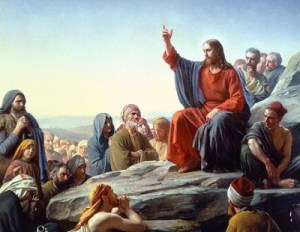
Not only did Christ teach about the kingdom of God through parables, but also through other teachings, such as the Sermon on the Mount, and to individuals, like Nicodemus. The beatitudes are spoken about in Matthew 5, and were spoken about during the well-known Sermon on the Mount. Jesus says, “Blessed are the poor in spirit, for theirs is the kingdom of heaven”, and “Blessed are those who are persecuted because of righteousness, for theirs is the kingdom of heaven”. Each example Christ uses in this chapter contrasts one thing that may not sound desirable to anyone by worldly standards, but says that the result is something eternal, and lasting longer than things that could be gained on earth. Jesus also teaches about what is necessary to enter the kingdom by using a child to illustrate that a childlike faith is necessary. Also, by showing that the kingdom was eternal showed that it could not fully come to be while Satan’s kingdom was still in power on earth, and the kingdom was in the process of being revealed and made known.
In John 3, there is a striking story told of a religious man, Nicodemus, seeking out Jesus in the night to question him about his teaching. In their conversation, Nicodemus begins by telling Jesus he knows that he has come from God because of the “miraculous signs you are doing”. Jesus’ reply was quite curious as he tells him, “I tell you the truth, no one can see the kingdom of God unless he is born again”. Nicodemus’ interest is sparked as he says clearly that a man cannot re-enter his mother’s womb and be physically born again. Jesus’ response again is very interesting to Nicodemus as Jesus says, “I tell you the truth, no one can enter the kingdom of God unless he is born of water and the Spirit. Flesh gives birth to flesh, but the Spirit gives birth to sprit. You should not be surprised at my saying, ‘You must be born again’…”. Jesus goes on to explain the battle between light and darkness, good and evil, and explains the importance of living in truth.
The encounter Nicodemus had with Jesus that night has truth about the kingdom that can be gained and applied to our understanding of the kingdom in general terms. Due to the mystery of the kingdom, it requires faith to be born again, and to be born of water and the spirit. For one to be apart of the kingdom, a certain amount of commitment is required of each person, and entrance by new birth is the first step. Colossians 1:13 says, “For he has rescued us from the dominion of darkness and brought us into the kingdom of the Son he loves, in whom we have redemption and forgiveness of sins”. To enter into his kingdom and to begin to understand the mystery, we must turn and be delivered from darkness, and enter his kingdom of light.
Snyder says, in his book on the various models of the kingdom of God that, “Being born of the Spirit by definition transcends our minds, our logical categories and powers. Logic and intuition tells us that conversion to Christ must transcend our logical explanations and models…”. He goes on to describe that when we experience something spiritual, often times the only understanding we have of a spiritual experience is to tie it to something physical that we know, which in this case was a physical birth.[18] In and of itself, this is a mystery, but it is a mystery that we can grasp in part here on earth, and understand in full once we reach heaven.
Jesus also speaks about the requirement of faith to enter the kingdom in Mark 10:13-16. Jesus says that the kingdom of God belongs to children because in order to receive the kingdom of God, we must have the faith of a child to enter. This is also a mystery about the kingdom, that in order to enter, one must have a child-like mindset. Often, the best way to understand something that is a mystery is to approach it in a manner without preconceived ideas, and this is essentially how Christ suggests the kingdom of God be approached, in order to understand the mystery.
The Beatitudes, found in Matthew 5:3-20 and Luke 6:20-26 “consist of nine sayings praising the attitudes of a true disciple of Jesus. The second half of each verse or phrase outlines the rewards of discipleship”19, which show that discipleship and the kingdom of God both go hand in hand with one another. In Matthew, there is a continual future tense used as it seems that in expectation, once these attitudes are acquired, the reward of those attitudes will be gained later in life, or in the life to come. Interestingly, in Matthew 5:17, it seems that Christ has come to bring his kingdom in fulfillment of the Law and Old Testament, so that instead of rules and regulations, Christ’s kingdom would replace those old habits.[19] These passages represent the “Keys to the Kingdom”, if you will, and show what is required to journey toward the kingdom of God.
Future Implications For The Church
“The kingdom is not the church. The apostles went about preaching the kingdom of God (Acts 8:12, 19:8; 28:23); it is impossible to substitute “church” for “kingdom” in such passages. However, there is an inseparable relationship”. The kingdom is accomplished through the church, and the mystery of the kingdom is also revealed in the church.[20] The church also is a witness to the kingdom, as Jesus says in Matthew 24:14, “This gospel of the kingdom will be preached throughout the whole world”, and the church is also an instrument for the kingdom to come, proclaiming the good news of salvation to all. “The church is the custodian of the kingdom (for the church has been given the keys of the kingdom of heaven: Matthew 16:19)”. The close connection of the church and the kingdom implies that the church should be aware of the important existence and role of the kingdom. “The kingdom manifests itself through the church, and thereby the future reign of God breaks into the present”, and the kingdom is already present as Matthew 12:28, and Romans 14:17 prove, but the kingdom is also still coming in the future as Matthew 25:24, and 1 Corinthians 6:9-10 also prove.[21] The role of the church should not be understood lightly, but should be carried out with great awareness and with great responsibility.
In 1922 an author composed a book of rather harsh words for the Church concerning the role of the Church as an instrument of the kingdom of God. The Church today would do well to be reminded of these words as author Elijah Kresge says, “The church must rediscover the prophetic conception of the kingdom of God or fail in the mission that was entrusted to her. Her theology must be rethought and her mission restudied from the view-point of the righteous social order which is implied in the fundamental principles of the kingdom of God…”.[22]
Many scriptures prove what the church was meant and entrusted to do, including Matthew 10:7-8, “As you go, preach this message: ‘The kingdom of heaven is near.’ Heal the sick, raise the dead, cleanse those who have leprosy, drive out demons. Freely you have received, freely give.”. Also, in Luke 10, the same message is reiterated that any disciple of Christ should preach that the kingdom of God was near, and to prepare. In Matthew 16, when Christ tells Peter he will be the rock of the church, he says, “I will give you [the church] the keys of the kingdom of heaven; whatever you bind on earth will be bound in heaven, and whatever you loose on earth will be loosed in heaven”. What a huge responsibility for the disciples to hear then, and what a reminder these words are now for the Church today.
Conclusion
In conclusion, it is easy to gather that the kingdom of God is past, present, and future. The way Jesus spoke of the coming of the kingdom reflected that pieces of the kingdom could be experienced here and now on earth, but the consummation of those promises were fully revealed and uncovered in the future. The gradual coming of the kingdom of God is what it means to be a true disciple of Jesus Christ.[23]
The revealing of what the kingdom of God really is was revealed by the person of Jesus Christ, “The secret of the kingdom of God has been given to you”, as Mark 4:11 states. But Romans 16:25-26 is the basis for understanding how the kingdom works: “Now to him who is able to establish you by my gospel and the proclamation of Jesus Christ, according to the revelation of the mystery hidden for long ages past, but now revealed and made known through the prophetic writings by the command of the eternal God, so that all nations might believe and obey him….”. The once mystery of the gospel has now been revealed and uncovered to show who Christ is, and what the kingdom of God looks like. “The Old Testament revelation looks forward to a single manifestation of God’s kingdom when the glory of God would fill the earth”.[24]
The mystery that has been revealed through Jesus Christ and salvation is a mystery still being uncovered and rediscovered. The church has a responsibility that should not be taken lightly, especially in this day and age. Let us remember the call to preach the gospel to all nations, as Christ preaches in Matthew 28, and let us preach aggressively that the kingdom of God is at hand, and “prepare the way for the Lord, make straight paths for him”, as Isaiah 40:3 prophesied.
Bibliography
Baylis, Albert H. From Creation to the Cross: Understanding the First Half of the Bible. Grand Rapids: Zondervan Publishing, 1996.
Elwell, Walter A. Evangelical Dictionary of Theology. Grand Rapids: Baker Academic, 2001.
Grundem, Wayne. Systematic Theology. Grand Rapids: Zondervan Publishing, 1994.
Harris, Francis B. The Kingdom of God and the Kingdom of the Heavens. Salem: N. D. Elliot, 1913.
Holy Bible, The. Grand Rapids, Zondervan Publishing, 1984.
Hooke, S. H. Christ and the Kingdom of God. New York: George H. Doran Company, 1917.
Kresge, Elijah Everett. The Church and the Ever-Coming Kingdom of God. New York: The Macmillan Company, 1922.
Lea, Thomas D. and David Alan Black. The New Testament: Its Background and Message. Nashville: Broadman & Holman Publishers, 2003.
Snyder, Howard A. Models of the Kingdom. Nashville: The Abingdon Press, 1991.
[1] Kresge, Elijah Everett.
The Church and the Ever-Coming Kingdom of God. (New York: The Macmillan Company, 1922), 3.
[2] Snyder, Howard A. Models of the Kingdom. (Nashville: The Abingdon Press, 1991), 16.
[3] Elwell, Walter A. Evangelical Dictionary of Theology. (Grand Rapids: Baker Academic, 2001), 659.
1
[4] Elwell, Walter A. Evangelical Dictionary of Theology. (Grand Rapids: Baker Academic, 2001), 657.
[5] Baylis, Albert H. From Creation to the Cross: Understanding the First Half of the Bible. (Grand Rapids: Zondervan Publishing, 1996), 180.
[6] Elwell, 657-658.
2
[7] Kresge, Elijah Everett. The Church and the Ever-Coming Kingdom of God. (New York: The Macmillan Company, 1922), 5-6.
[8] Snyder, Howard A. Models of the Kingdom. (Nashville: The Abingdon Press, 1991), 26-27.
3
[9] Daniel 4:3, 6:26, 7:14
[10] Daniel 7:26-27
[11] Ezekiel 21:26, Obadiah 21
4
[12] Hooke, S. H. Christ and the Kingdom of God. (New York: George H. Doran Compang, 1917), 6.
5
[13] Harris, Francis B. The Kingdom of God and the Kingdom of the Heavens. (Salem: N. D. Elliot, 1913), 15.
6
[14] Matt. 13:31-35, Mark 4:26-34
[15] Lea, Thomas D. and David Alan Black. The New Testament: Its Background and Message. (Nashville: Broadman & Holman Publishers, 2003), 208.
[16] Matthew 13:24-30, 36-43, 47-50
7
[17] Elwell, Walter A. Evangelical Dictionary of Theology. Grand Rapids: Baker Academic, 2001), 659.
9
[18] Snyder, Howard A. Models of the Kingdom. (Nashville: The Abingdon Press, 1991), 127.
[19] Lea, Thomas D. and David Alan Black. The New Testament: Its Background and Message. (Nashville: Broadman & Holman Publishers, 2003), 201.
11
[20] Elwell, Walter A. Evangelical Dictionary of Theology. Grand Rapids: Baker Academic, 2001), 660.
[21] Grundem, Wayne. Systematic Theology. Grand Rapids: Zondervan Publishing, 1994), 865-866.
12
[22] Kresge, Elijah Everett. The Church and the Ever-Coming Kingdom of God. (New York: The Macmillan Company, 1922), x.
13
[23] Snyder, Howard A. Models of the Kingdom. (Nashville: The Abingdon Press, 1991), 121.
[24] Elwell, Walter A. Evangelical Dictionary of Theology. Grand Rapids: Baker Academic, 2001), 660.
14

 Jakey Jake Jake. I had high hopes for you. Yes, I’ve never watched any season of the Bachelor so faithfully, well never have I watched any season of the Bachelor at all, but that’s beside the point.

 somehow beautiful